Beauty in a cricket ground comes from the relationship between the oval and its surroundings. A mountain can matter more than a giant stand; a historic pavilion can matter more than a flawless new roof. On that basis, this is CricWin24's editorial answer to the search for the most beautiful cricket stadiums in the world—not an ICC award, an official top-10, a public vote or a ranking by seating size.
The order weighs visible scenery, architecture, setting, cricket history and documented spectator character. It does not claim a first-hand visit. Descriptions separate what photographs show from what venue authorities and cricket records establish. Capacities are current published figures or qualified ranges; N/A means no current certified cricket capacity was established, not that the ground has no spectators.

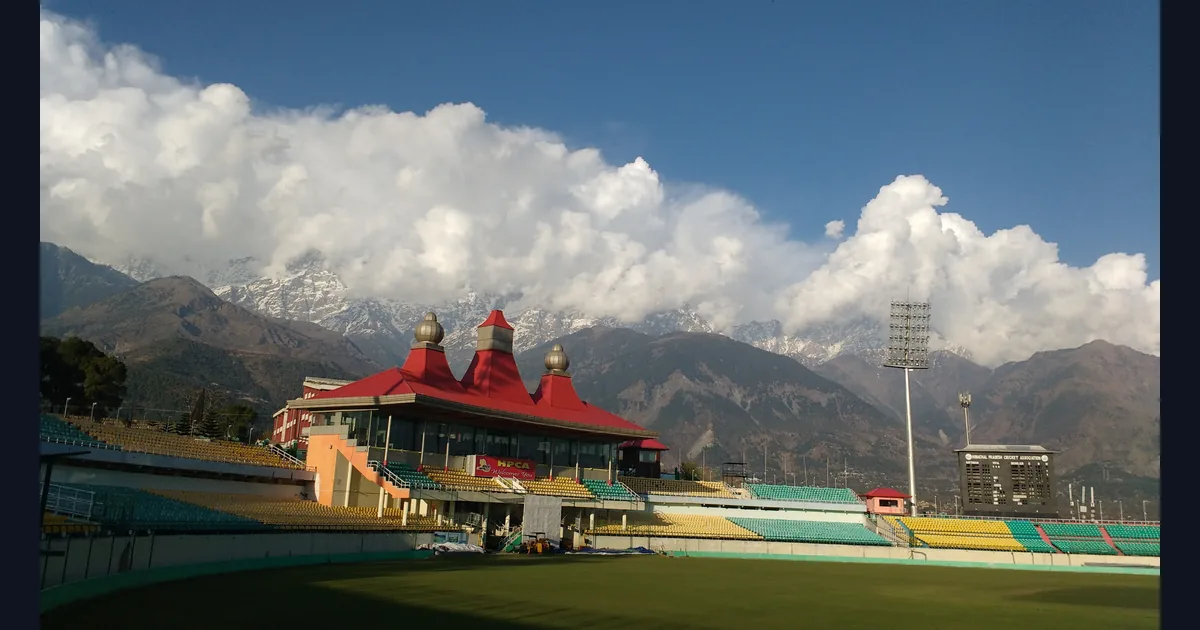
Featured image credit: HPCA Stadium, Dharamshala. Photo by TheSereneRebel, CC BY-SA 4.0. The hero is an archive image from 5 March 2017.

Key Takeaways - HPCA Stadium, Dharamshala leads this editorial list because its open, low-rise bowl makes the Dhauladhar setting part of the cricket view. - Newlands and Galle are the strongest mountain-and-ocean alternatives: one frames cricket with Table Mountain, the other with the Indian Ocean and Galle Fort. - Capacity is a separate question. Adelaide Oval publishes 53,500, while Pukekura Park's current certified cricket capacity is N/A in the reviewed official evidence. - The list includes classic heritage grounds, purpose-built modern venues, a Caribbean setting and two very different New Zealand interpretations of beauty.
Table of contents
- How we chose the world's most beautiful cricket stadiums
- Top 10 at a glance
- 1. HPCA Stadium, Dharamshala, India
- 2. Newlands Cricket Ground, Cape Town, South Africa
- 3. Galle International Stadium, Galle, Sri Lanka
- 4. Adelaide Oval, Adelaide, Australia
- 5. Lord's Cricket Ground, London, England
- 6. Arnos Vale Stadium, Kingstown, Saint Vincent and the Grenadines
- 7. Sylhet International Cricket Stadium, Sylhet, Bangladesh
- 8. Pukekura Park, New Plymouth, New Zealand
- 9. Sydney Cricket Ground, Sydney, Australia
- 10. Bay Oval, Mount Maunganui, New Zealand
- Which is the most scenic cricket ground?
- Stadium architecture versus natural beauty
- Frequently asked questions
- Conclusion
How we chose the world's most beautiful cricket stadiums
This is a reasoned editorial selection, not a measurable beauty score. Five questions shaped the order: landscape and sightlines, architecture, belonging to place, cricket history and spectator atmosphere. Sources substantiate the descriptions; source availability is not a beauty score. Mountains, coast, parkland, lakes and historic structures count when documented. A current capacity is never replaced with historic attendance, a rugby crowd or temporary seating.
That is why a compact park ground can sit beside a much larger oval. Compare seating size separately in our India stadium capacity guide.
Top 10 at a glance
| Rank | Stadium | Location | Current cricket capacity, qualified | Defining feature |
|---|---|---|---|---|
| 1 | HPCA Stadium | Dharamshala, India | Approx. 21,200–23,000; BCCI publishes 21,200 | Open bowl below the Dhauladhar range |
| 2 | Newlands Cricket Ground | Cape Town, South Africa | 25,000 published by CSA; configuration unspecified | Table Mountain and Devil's Peak setting |
| 3 | Galle International Stadium | Galle, Sri Lanka | N/A current; no certified current capacity established | Indian Ocean and Galle Fort context |
| 4 | Adelaide Oval | Adelaide, Australia | 53,500 published by Cricket Australia and ICC | Riverbank parkland, curved stands and old scoreboard |
| 5 | Lord's Cricket Ground | London, England | About 30,000–31,000 published range | Grade II-star Pavilion and village-green character |
| 6 | Arnos Vale Stadium | Kingstown, Saint Vincent and the Grenadines | About 18,000; configuration unspecified | Lush Caribbean hills and coastal-airport setting |
| 7 | Sylhet International Cricket Stadium | Sylhet, Bangladesh | 18,000 ESPN profile; current total not definitive | Tea-estate setting and green gallery |
| 8 | Pukekura Park | New Plymouth, New Zealand | N/A current certified cricket capacity | Tree-lined oval and terraced park banks |
| 9 | Sydney Cricket Ground | Sydney, Australia | 44,002–48,000 published figures not reconciled | Heritage pavilions beside city parkland |
| 10 | Bay Oval | Mount Maunganui, New Zealand | 12,000 published by venue | Mauao, grassy banks and timber pavilion |
1. HPCA Stadium, Dharamshala, India
HPCA Stadium earns the top spot because the mountains are not a distant postcard detail. The open, low-rise bowl lets the Dhauladhar range define the proportions of the cricket view.
The BCCI's venue directory publishes a capacity of 21,200. The District Kangra profile gives an approximate 21,200–23,000 range, so the table keeps both figures instead of pretending that one configuration is universal.
Dharamshala's cricket history is young compared with Lord's or Newlands, but it has reached major stages quickly: ODI cricket arrived in 2013, Test cricket in 2017 and the ground hosted 2023 World Cup matches. That combination—modern international relevance, a compact bowl and a Himalayan frame—makes it the clearest answer for readers searching for a cricket ground with mountain views.
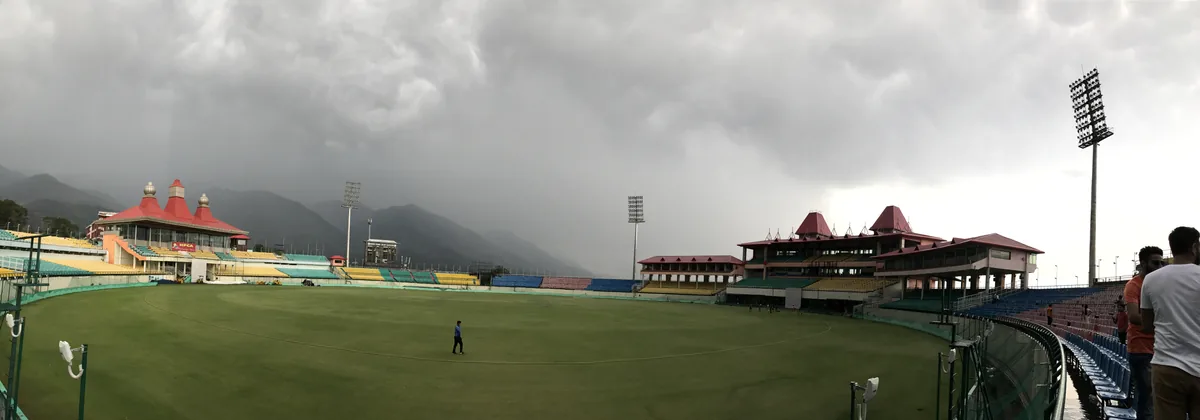
The best view is a wide side-on composition that includes the field and mountain line. The hero is dated 5 March 2017 and the panorama 13 June 2017; neither claims the ground's 2026 condition.

2. Newlands Cricket Ground, Cape Town, South Africa
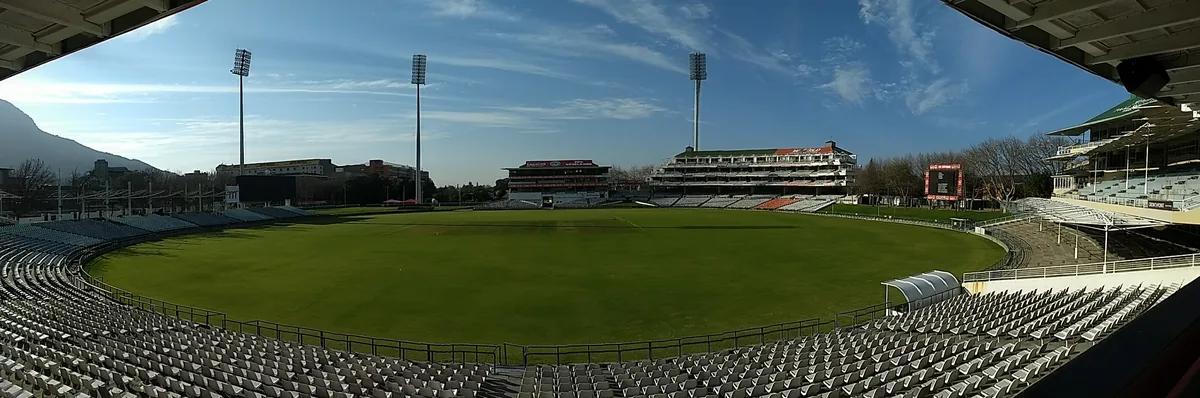
Newlands is beautiful in the way a historic ground and a natural amphitheatre can reinforce each other. The cricket field sits below Table Mountain and Devil's Peak, and the long panoramic view gives the mountain mass a stronger role than any individual stand. The result is less alpine drama than Dharamshala and more of a settled Cape Town sense of place.
The venue operator says Newlands was established in 1888, while Cricket South Africa's stadium directory publishes 25,000. That capacity is useful, but the source does not state a configuration or sellable-seat method, so it should not be treated as a precise comparison with every other row. Its history includes the 2003 World Cup opening ceremony and the 2023 Women's T20 World Cup final.
Newlands shows why “beautiful” needn't mean “new”: its appeal is the contrast between an established cricket home and the mountain skyline. Its place here rests on the Cape Town setting and historic character, not crowd size.
The selected archival panorama, dated 21 July 2018, shows the cricket bowl with part of the mountain skyline to the left.

3. Galle International Stadium, Galle, Sri Lanka
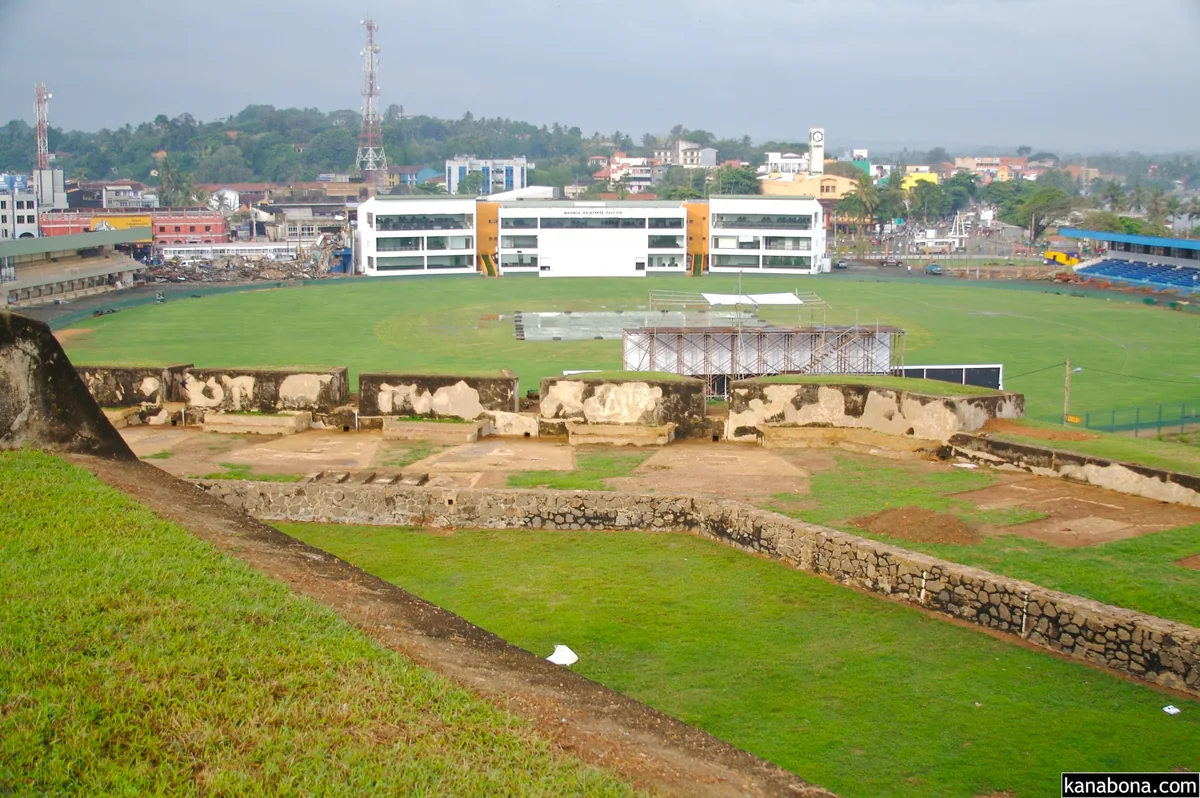
Galle International Stadium is one of cricket's strongest examples of a ground whose surroundings do as much visual work as its buildings. The Indian Ocean is visible on two sides, while the Galle Fort clocktower and fort walls give the opposite edge a historic vertical marker. From the Moon Bastion, the oval reads as part of the coastal city rather than an isolated sports complex.
The UNESCO description of the Old Town of Galle and its Fortifications supplies the wider historical context: Portuguese origins, Dutch development and World Heritage status. That designation belongs to the fort, not to the cricket ground itself. Sri Lanka Cricket continues to identify Galle International Cricket Stadium as a Test venue, and the ground profile records its long association with international cricket and memorable matches, including Pakistan's 342-run chase in 2022.
Capacity needs a firm qualification. The current figure is N/A in the reviewed authoritative evidence.
The historical comparison figure is omitted because it is not needed to explain Galle's visual rank. This is exactly why Galle ranks for beauty, not size.
The photograph is a licensed archival view from Moon Bastion dated 9 January 2008. It is a fort view of the actual ground, not a close-up taken from the outfield, and the creator's watermark remains in the resized image.

4. Adelaide Oval, Adelaide, Australia
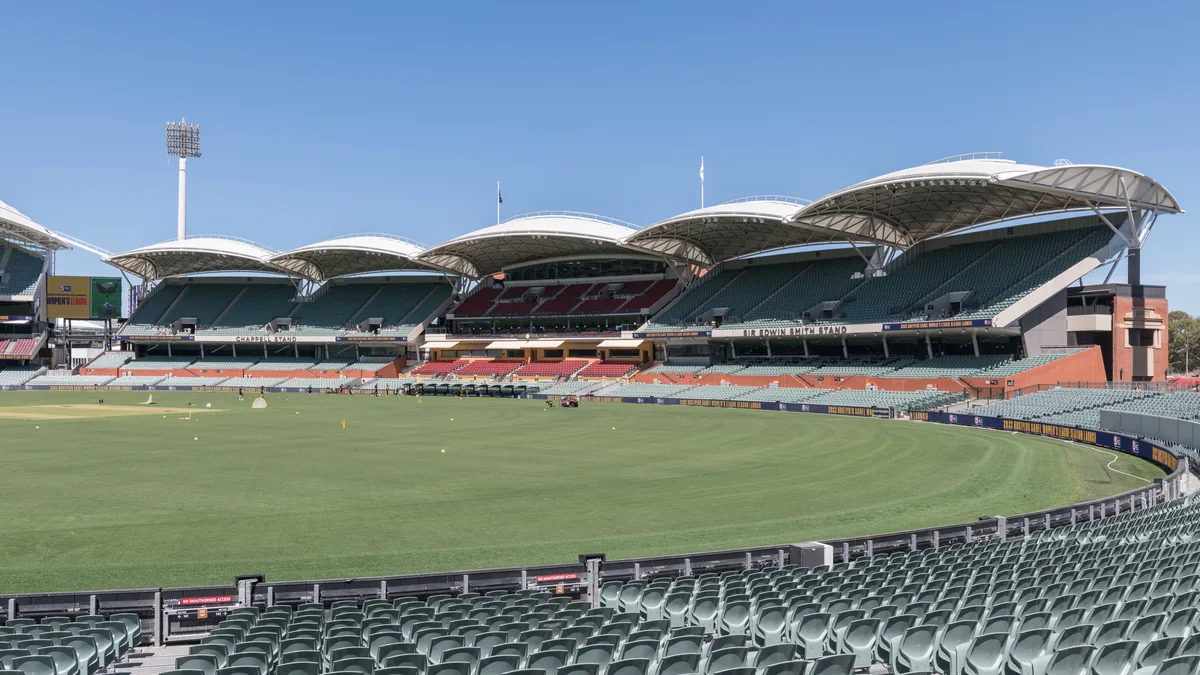
Adelaide Oval takes a different route to beauty. Its strongest feature is the negotiation between a large modern stadium and a softer river-and-parkland setting. Curved stands surround the oval, while the retained century-old scoreboard supplies a visible piece of the ground's earlier identity. The contrast feels deliberate rather than accidental: a major event venue that still reads as part of Adelaide's open riverbank precinct.
Cricket Australia and the ICC venue profile publish 53,500 after the 2013 redevelopment. The official operator's history describes the riverbank setting, modern facilities and heritage scoreboard, while the venue timeline records the first Test in 1884, the 1933 Bodyline Test and the 1993 one-run Test. The first day-night Ashes Test followed in 2017, adding a modern visual era to a long cricket story.
Adelaide appears above Lord's because its architecture is sculpted around the whole bowl, while parkland and river keep the scale open. Compare the numbers in our Adelaide Oval ground guide and largest cricket stadiums in Australia; capacity is a fact, not the rank's reason.
The selected image is a wide eastern-stands view dated 14 February 2023, not a claim about a 2026 match-day arrangement.

5. Lord's Cricket Ground, London, England
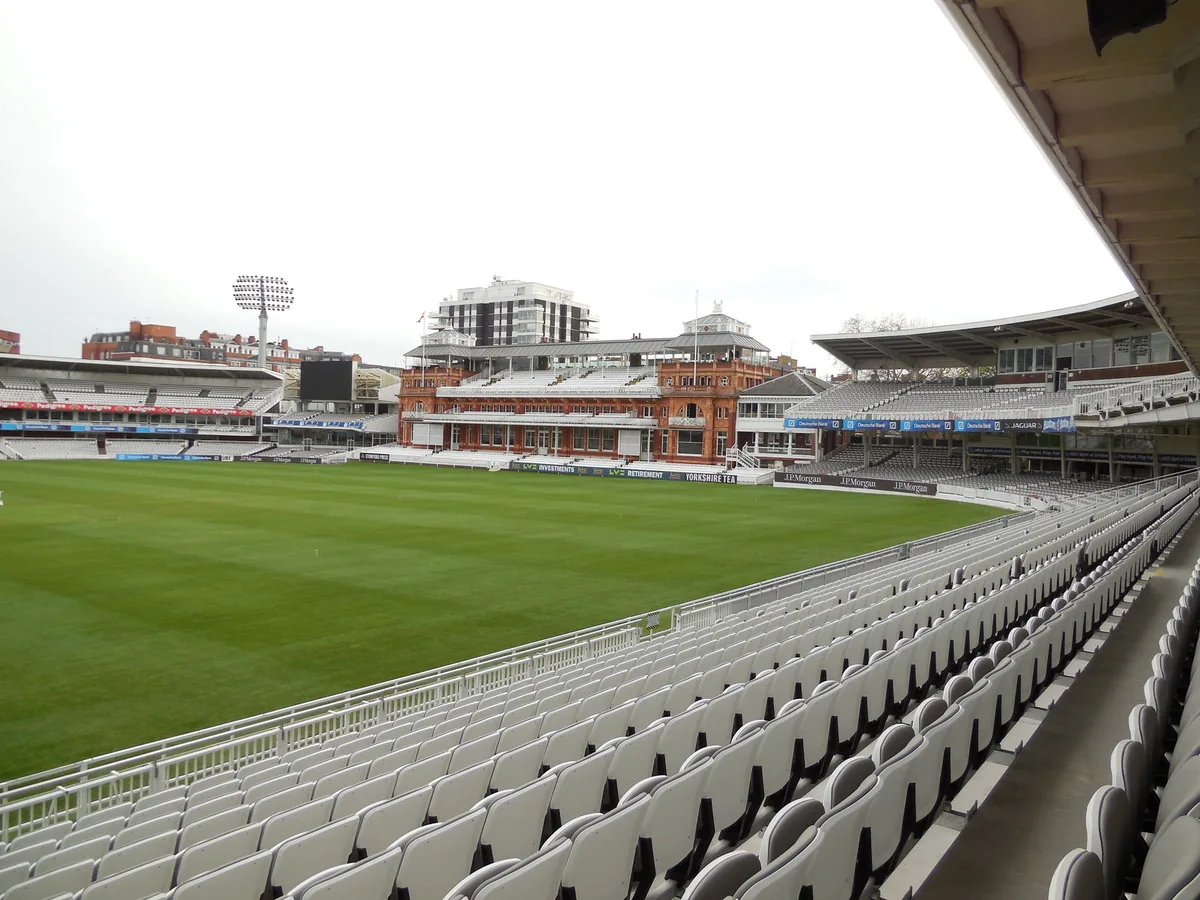
Lord's is the list's clearest architecture-first choice. Its red-brick Pavilion gives the St John's Wood ground the visual discipline of a village green. Designed by Thomas Verity, built in 1889–90 and Grade II-star listed, the Pavilion defines the view; the selected photograph shows its exterior from inside the ground, not the Long Room interior.
MCC's history records the present Lord's ground's first match in 1814. The venue later hosted the 1975 and 2019 World Cup finals and the 2025 World Test Championship final, as the ICC finals history records.
MCC documents the Pavilion architecture and Grade II-star listing in its Long Room venue history. MCC's published capacity history gives no single figure to use as a universal current total: one planning announcement described 31,000, while the ESPNcricinfo ground profile lists 30,000. The table therefore keeps the qualified 30,000–31,000 range and excludes future or temporary seating assumptions.
Lord's does not compete with Dharamshala on scenery. It wins on proportion, brickwork, heritage and the feeling that the cricket field remains the main room in the building.
For readers comparing English venues by size rather than character, the England stadium capacity guide is the better companion page.

6. Arnos Vale Stadium, Kingstown, Saint Vincent and the Grenadines
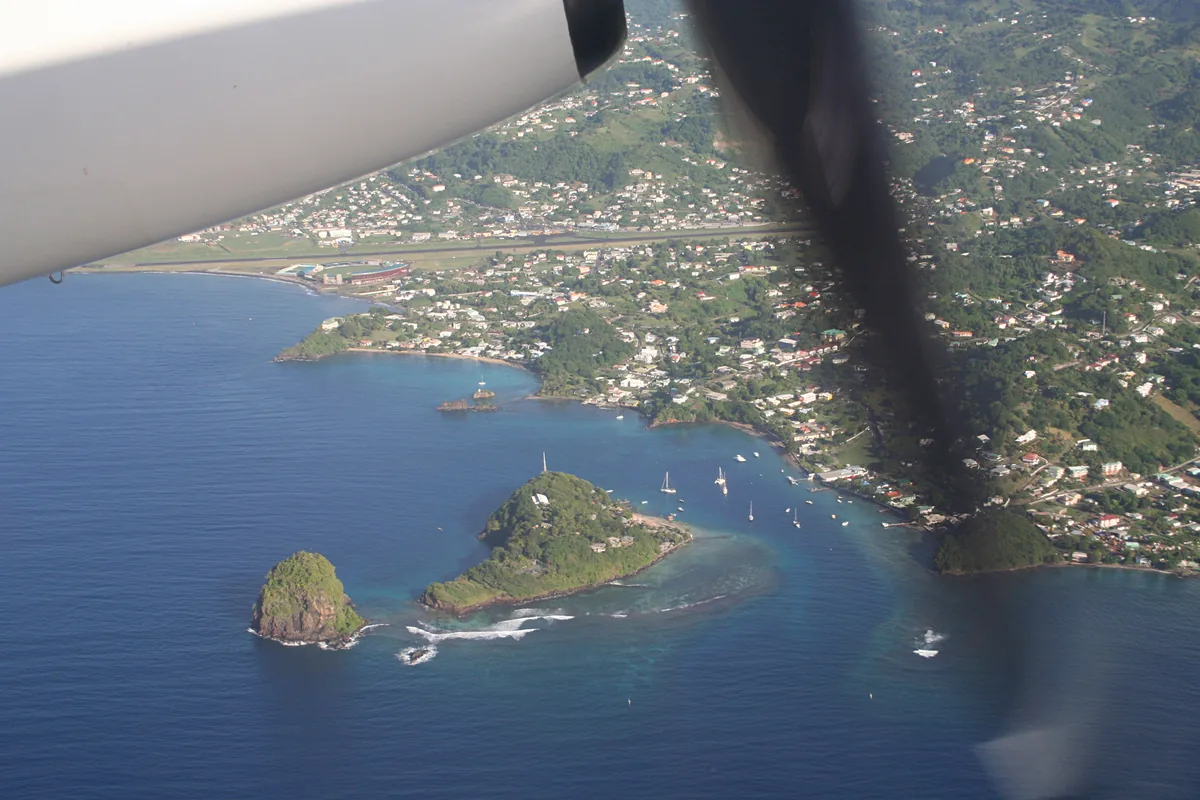
Arnos Vale is the Caribbean entry that feels most tied to its geography. The Kingstown-area ground sits among green hills with the former airport context and coast close to the wider view. That relationship is easier to understand from the air than from a tight field-level image, so its place here depends on setting more than on a detailed reading of the stands.
The official sources use related names—Arnos Vale Stadium, Arnos Vale Playing Field and Arnos Vale Ground. CWI's ticket page publishes about 18,000, but does not establish a single cricket-only configuration or explain the whole multi-use footprint. The same source records the 2007 renovation work, including the eastern stand, pavilion, media centre and operations areas. Arnos Vale's international history includes its first ODI in 1981, first Test in 1997 and 2024 Men's T20 World Cup matches, including South Africa v Nepal and Afghanistan v Bangladesh, as recorded in the ICC match roundup.
The photograph must not overpromise: it is a distant 24 November 2006 aerial view from Young Island. The ground is visible near the former airstrip, while an aircraft wing and coastal foreground occupy part of the frame; it is not a close-up of current seating or proof of a present-day configuration.

7. Sylhet International Cricket Stadium, Sylhet, Bangladesh
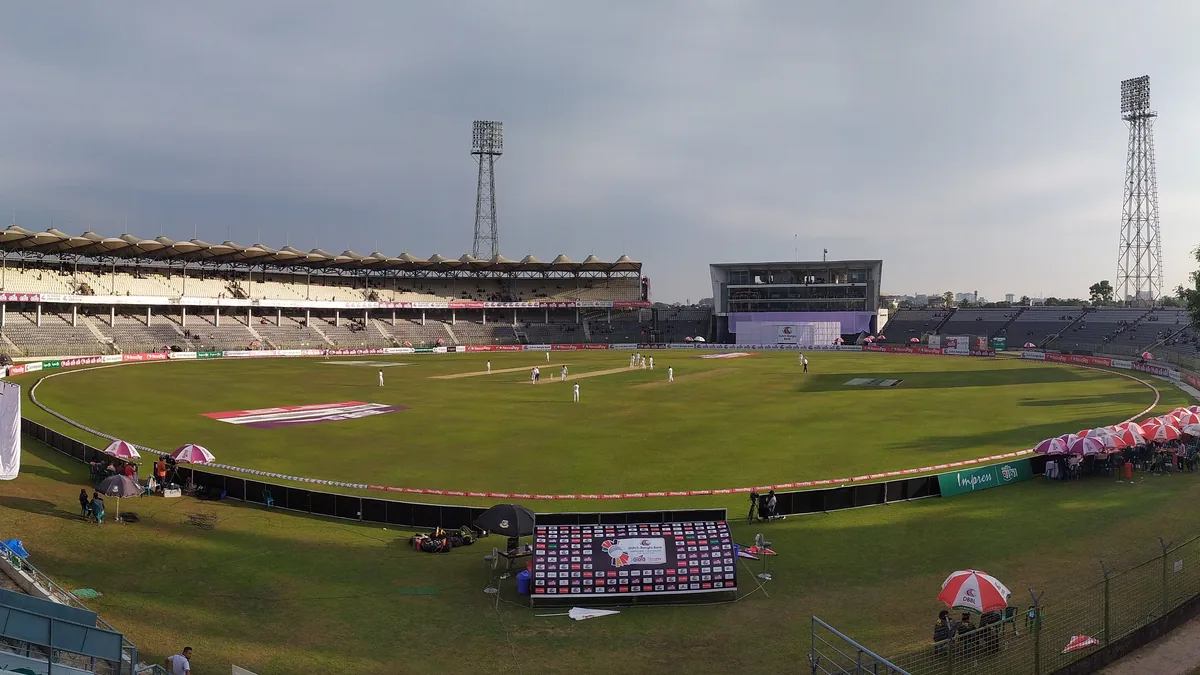
Sylhet International Cricket Stadium has a softer visual language than the first six grounds. Its appeal comes from the green gallery, tiled-roof pavilion and the tea-country setting around Lakkatura. A 2018 venue feature described the feeling as a “hill inside a stadium”; that phrase works because the ground's planted edges and surrounding hills stop the bowl from becoming a generic concrete container.
The current capacity is qualified rather than absolute: an ESPN ground profile lists 18,000. No current BCB capacity specification was located in the approved evidence, so the published profile figure is not presented as a definitive audited total.
The venue was established in 2007, hosted 2014 World Twenty20 matches and staged its first Test in 2018, according to the ICC venue account and the BCB itinerary record.
Sylhet's beauty is architectural in small doses. The roofline, green gallery and planted setting matter more than a monumental stand, giving the list a South Asian venue that borrows its calm from tea-estate country.
The photograph below is a panorama from the grandstand during the Bangladesh–New Zealand first Test on 30 November 2023. The tea plantations are geographic context from the venue record; they are not claimed as visible in every part of this particular frame.

8. Pukekura Park, New Plymouth, New Zealand
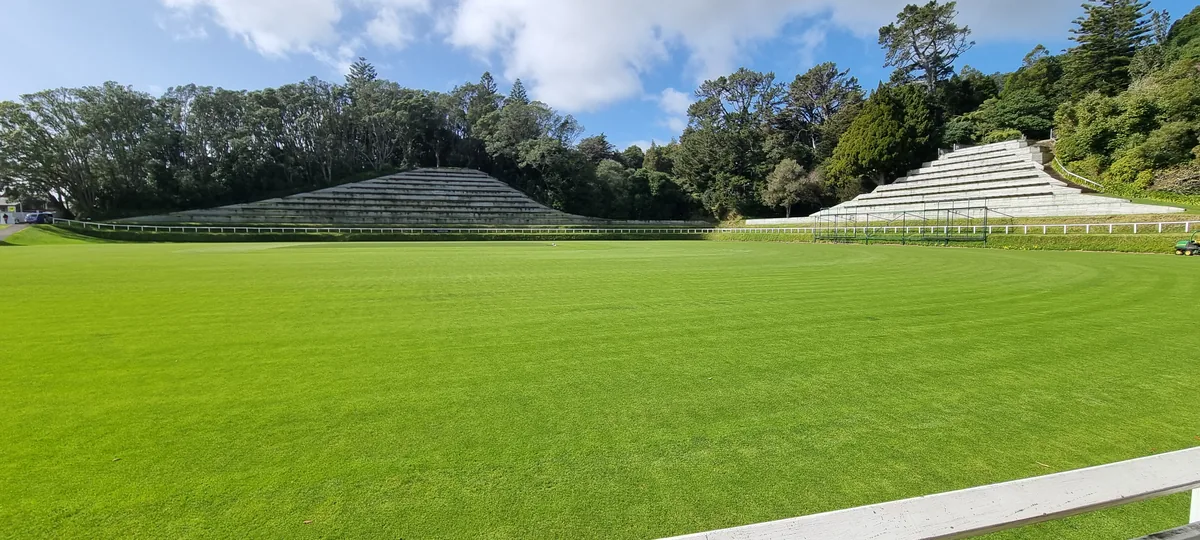
Pukekura Park is beautiful because it feels like a cricket oval placed inside a mature public garden rather than a stadium dropped onto an empty site. The 52-hectare park in central New Plymouth contains dense vegetation, formal gardens, lakes and terraced spaces. At the sports ground, raised spectator banks and a continuous tree canopy give the oval an intimate, amphitheatre-like edge.
New Plymouth District Council's 2024 reserve plan records the first cricket match in 1892, after work filled the swamp and created terrace seating. A council history also confirms that the park hosted a 1992 World Cup match.
Current certified cricket capacity is N/A. A 2021 council report expected 4,500 for a rugby match, and a historical account records about 6,000 spectators for day two of Central Districts v South Africa in March 1953. Neither is a present cricket capacity. At a multi-use park, event attendance and legal seating are not interchangeable. Our New Zealand stadium capacity comparison explains why size needs a separate methodology.
The image is a wide 24 August 2026 view of the exact sports ground, showing the oval, terraces and trees that make this New Plymouth ground belong in the final ten.

9. Sydney Cricket Ground, Sydney, Australia
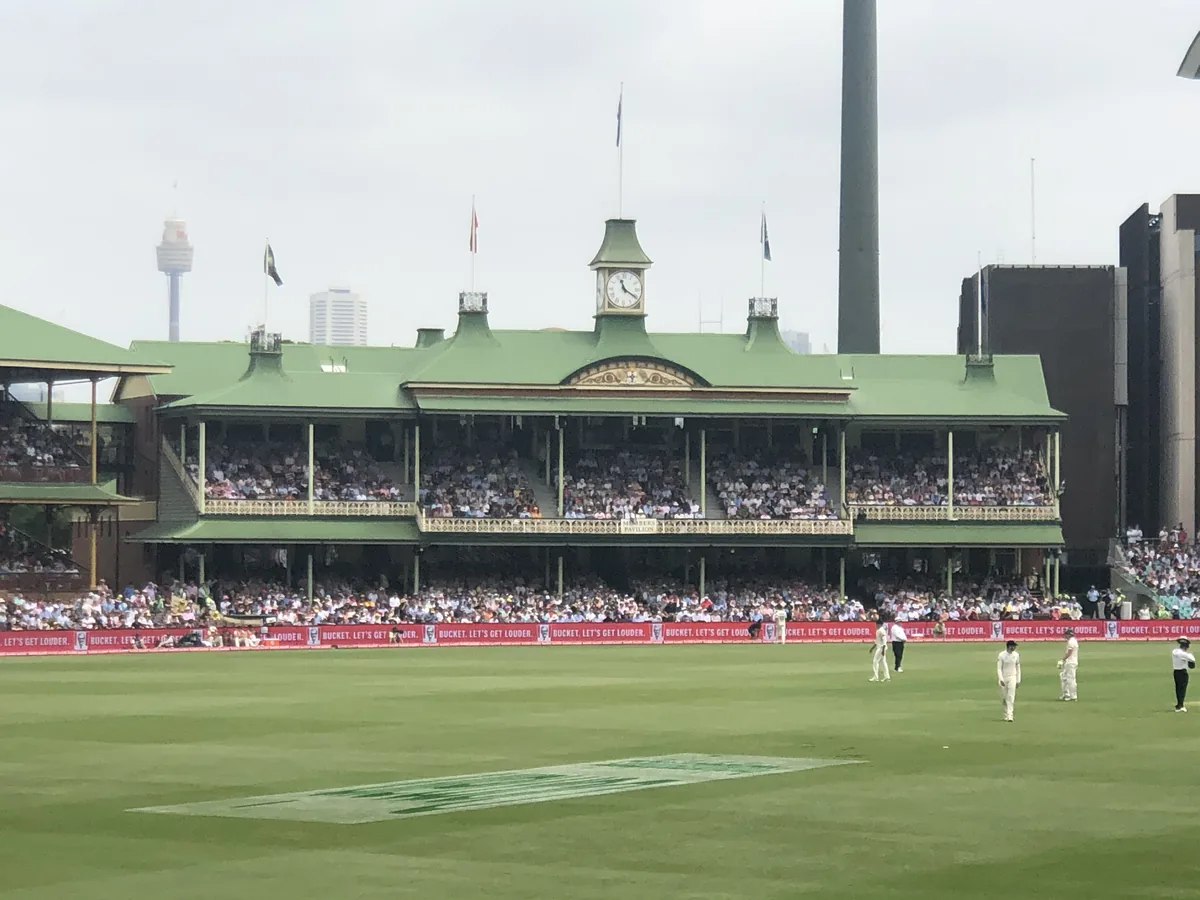
The Sydney Cricket Ground is the list's history-heavy urban choice. Moore Park supplies greenery and breathing room, but the strongest visual signature is the pair of heritage pavilions: the Members and Ladies stands with their green roofs, set against newer seating and the city beyond. It is less naturally dramatic than Newlands or Galle. Its beauty is the accumulated look of a ground that has kept its cricket memory visible.
Venues NSW identifies the SCG's Moore Park setting and publishes 48,000 after the 2014 stand work. ESPN's ground profile lists 44,002, and the approved evidence does not reconcile the difference, so the table records a 44,002–48,000 range rather than choosing a winner. The SCG Trust timeline places the first Test in 1882; the ground is also bound to the 1932–33 Bodyline story, the Bradman and Barnes era of 1946–47 and the 2015 World Cup semifinal.
The selected photograph is a genuine 3 January 2020 image of the Members Pavilion during Australia v New Zealand Test cricket, not a claim about the current 2026 configuration. For another perspective on Australian cricket settings, our WBBL venues guide includes nearby North Sydney Oval; it is a different ground from the SCG.

10. Bay Oval, Mount Maunganui, New Zealand
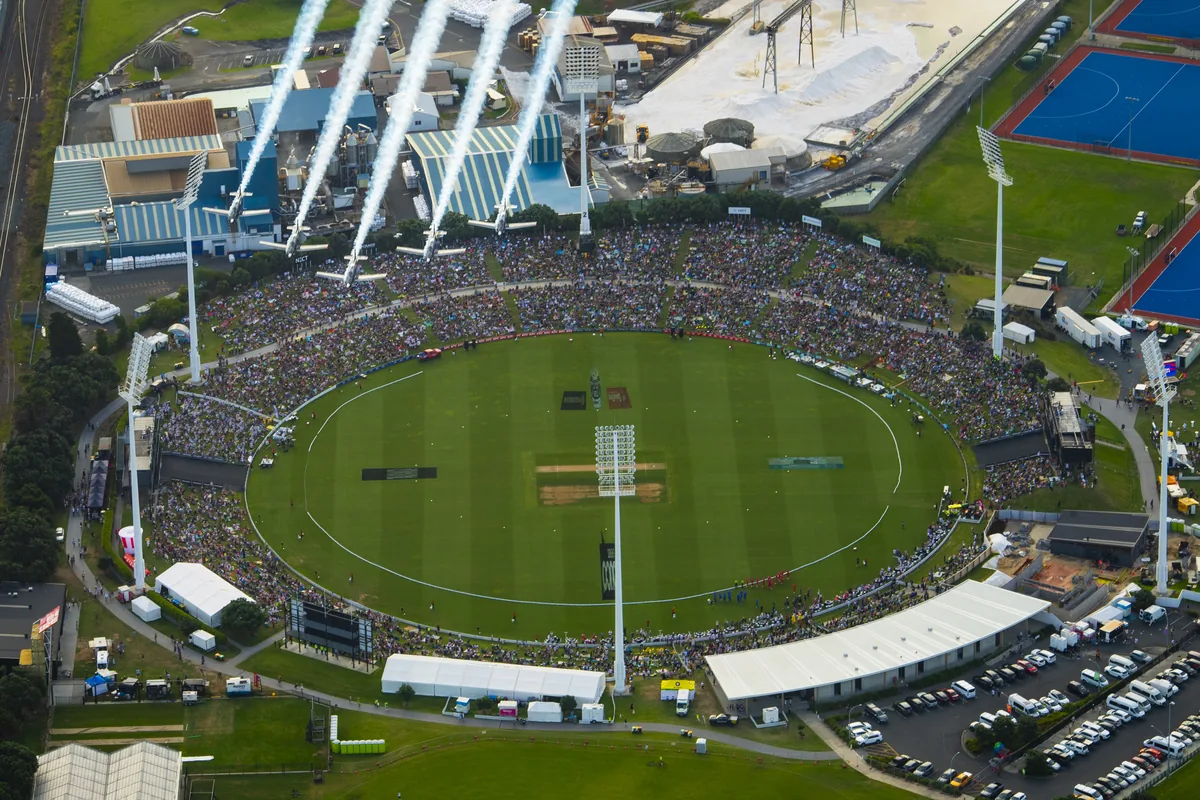
Bay Oval closes the list with a clean, coastal form. The ground sits at Blake Park in Mount Maunganui, close to Mauao and the Bay of Plenty, with grassy banks and a curved timber pavilion rather than a ring of oversized concrete tiers. The official venue page publishes 12,000; it does not provide a configuration breakdown, so the number is retained as a venue figure rather than a promise of permanent cricket seating in every event layout.
The ICC venue profile describes Bay Oval as being at the base of Mauao, with picturesque grass banks, and dates the build to 2005 with international cricket from 2014. Jasmax adds the architectural detail: the pavilion uses an ICC-rated timber radial glulam structure. The first Test, New Zealand v England, came in 2019, as the scorecard record shows, and the ground also opened the 2022 Women's World Cup.
The selected aerial identifies the field, facilities, event crowd and aircraft smoke trails. Its metadata date is 20 January 2024, while the NZDF caption references January 2023, so it remains an archival view without a definite event year or current-match claim.

Which is the most scenic cricket ground?
For a single editorial answer, HPCA Stadium, Dharamshala is the most scenic because its mountain backdrop changes the scale of the cricket view. Galle is the coastal answer, Newlands the strongest city-and-mountain combination, and Pukekura Park the most convincing parkland ground.
The important distinction is that this is an opinion informed by documented setting and photographs. It is not an official aesthetic designation, and weather or the viewing angle can change the impression completely.
Stadium architecture versus natural beauty
The best-looking grounds balance built form and place: Adelaide's curved stands meet a riverbank, Lord's Pavilion anchors a village green, Bay Oval uses timber and grass, while Dharamshala and Galle let mountains, ocean and fort do the visual work.
Beauty and capacity should never be merged. Adelaide's 53,500 does not make it more beautiful than Pukekura Park, while Galle can rank third with no current certified capacity. A seating table asks how many people a configuration holds; this list asks what makes a cricket setting memorable.
Frequently asked questions
Is there an official ranking of the world's most beautiful cricket stadiums?
This is CricWin24's editorial selection, not an official ICC award or ranking. The cited authorities establish venue facts; they do not endorse this order.
Does the biggest cricket stadium deserve to rank first?
Not automatically. Capacity is only a comparison field. Adelaide Oval publishes 53,500, but HPCA leads because its open bowl and Dhauladhar setting make the surroundings central to the view.
Which cricket stadiums have the best mountain views?
HPCA Stadium in Dharamshala is the clearest mountain-view pick, with Newlands close behind because of Table Mountain and Devil's Peak. Bay Oval has a coastal-volcanic setting around Mauao, though the selected aerial does not claim Mauao is visible.
Which beautiful cricket grounds are also heritage venues?
Lord's and the Sydney Cricket Ground are the strongest heritage examples. Lord's current ground dates to 1814 and its Pavilion is Grade II-star listed; the SCG's Members and Ladies pavilions are heritage-listed and its first Test was in 1882. UNESCO's designation applies to Galle Fort, not the cricket stadium.
Are the photographs current match-day images?
No. Each is a genuine archive photograph with its date and scene stated. The images show real venues but do not claim 2026 condition, permanent seating or current configuration; Bay Oval's metadata/event-date conflict is stated in its caption.
Why is Pukekura Park included when its capacity is N/A?
Because the ranking is about beauty, not size. Council material and the photograph document Pukekura's tree-lined oval and terraced banks, while no current certified whole-ground cricket capacity was established. Historic attendance is not substituted for one.
Conclusion
The most beautiful cricket stadiums are not beautiful for one reason. Dharamshala frames an open bowl with mountains; Galle places cricket beside ocean and fort; Lord's makes a Pavilion part of cricket's visual grammar; Pukekura lets trees and terraces define the oval. Adelaide, Sydney and Bay Oval show that architecture matters when it belongs to its setting.
Treat the capacities as qualified facts, not ranking signals, and the photographs as dated views rather than current-condition promises. Then read our guide to the most successful T20 teams in cricket history.
Source register
Inline citations link directly to the supporting source below. Open the register to check the original report, announcement, profile or scorecard. Facts are dated; editorial selection and reported claims are distinguished in the article.
View the consulted sources
- 1. BCCI Venues
- 2. HPCA Cricket Stadium — District Kangra
- 3. Welcome to YesPlay Newlands
- 4. Cricket Grounds & Stadiums — Cricket South Africa
- 5. Old Town of Galle and its Fortifications
- 6. India National Men’s Tour of Sri Lanka 2026
- 7. Galle International Stadium ground profile
- 8. Adelaide Oval — Cricket Australia
- 9. Adelaide Oval — Venue
- 10. Learn more about Adelaide Oval
- 11. Our History — MCC
- 12. A history of ICC World Cup Finals at Lord’s
- 13. The Long Room — MCC
- 14. Arnos Vale Stadium — CWI Tickets
- 15. Final-over thrillers in the 2024 Men’s T20 World Cup
- 16. Sylhet International Cricket Stadium ground profile
- 17. Bangladesh seek winning start at latest Test venue
- 18. Itinerary announced for Ireland’s Tour of Bangladesh
- 19. Pukekura Park — Reserve Management Plan 2024
- 20. Historic touches in place as Pukekura Park transformed for footy
- 21. Sydney Cricket Ground — Venues NSW
- 22. Sydney Cricket Ground — ESPNcricinfo
- 23. Historical Timeline — Sydney Cricket & Sports Grounds
- 24. Bay Oval
- 25. Bay Oval — Venue
- 26. Bay Oval — Jasmax project page
- 27. New Zealand v England, first Test at Mount Maunganui
- 28. Planning permission granted for Compton and Edrich Stands
- 29. Lord’s — Cricket Ground in London, England
- 30. Sporting Events — History of Pukekura Park
Read our editorial standards or corrections process for factual updates.