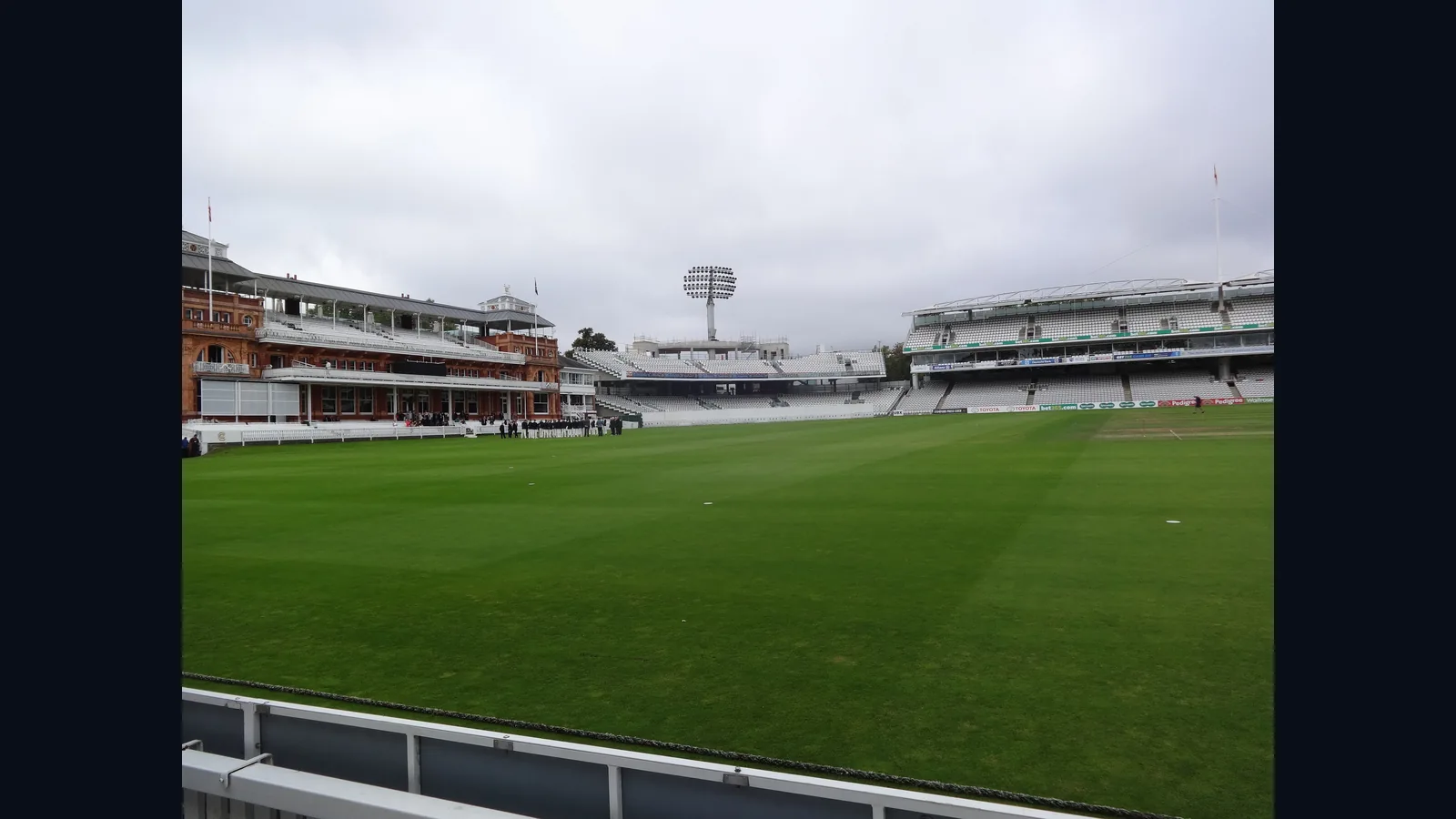
Lord’s Cricket Ground in London is the largest cricket stadium in England on the clearest published cricket-capacity basis: about 31,000 spectators. That figure describes the ground after the Compton and Edrich stands were completed, rather than a historic attendance record or a future redevelopment promise. MCC’s next Allen and Tavern stand project is intended to add at least 1,000 seats, but that is an expansion in progress and is not counted as present capacity.
This ranking uses spectator capacity because “largest” in a stadium question normally means how many people the venue can seat for cricket. It does not mean the biggest outfield, the longest boundary, the largest plot of land or the highest one-day attendance. Published numbers also do not always describe the same thing: one venue may quote a regular cricket configuration, another an international matchday maximum and another a post-development target. The lower places should therefore be read as a practical, evidence-led order rather than a certified national census.
Key Takeaways
- Lord’s is England’s largest cricket-capable ground, with a published capacity of about 31,000 after its 2021 stand redevelopment.
- The Kia Oval is published at approximately 27,500 and Edgbaston at 25,000. Old Trafford’s 26,700 figure came from a development proposal and is not treated as verified operating capacity.
- Headingley’s published cricket-ground figure is 18,350. Old Trafford’s ground-profile benchmark is 19,000, but international/event configurations can differ.
- Future seats at Lord’s are not current seats. Capacity can also change for Tests, one-day internationals, domestic matches, hospitality layouts and safety arrangements.
How “largest cricket stadium in England” is measured
The useful comparison is a venue’s published spectator capacity when it is configured for cricket. That keeps the answer focused on grounds that actually host cricket and prevents a football or rugby stadium’s all-purpose event maximum from distorting the list. It also explains why a record crowd is not automatically the same as a stadium’s current capacity: attendance can include standing areas, temporary seating, multiple sessions or a different safety layout.
The geographic boundary here is England, not the United Kingdom and not England and Wales. Cardiff’s Sophia Gardens is a major international cricket venue, but it is in Wales and is outside this answer. The same rule applies to any UK-wide list that mixes English grounds with Welsh venues.
The best-supported top group is relatively compact. Lord’s, The Oval, Old Trafford and Edgbaston have the clearest large-ground figures. These are five selected major venues, not an exhaustive or audited national top-five order. Old Trafford’s largest current international configuration remains unresolved; Headingley’s figure also needs qualification because the wider site contains a rugby venue. The number used below is the cricket-ground figure, not the full complex’s rugby or event capacity.
For background on other grounds and their cricket use, the Cricket Grounds Directory is the most useful place to continue exploring. The Cricket Insights hub also collects explainers that put venue records and match conditions in context.
Five major English cricket grounds compared by capacity
1. Lord’s Cricket Ground — London
Published cricket capacity: about 31,000
Capacity basis: completed cricket-ground capacity after the Compton and Edrich stands redevelopment; future stand additions excluded.
Lord’s is the direct answer to the question. The MCC-owned ground in St John’s Wood remains England’s biggest established cricket venue by the published capacity figures available for comparison. The BBC reported that the Compton and Edrich project was completed for the 2021 season and took capacity to 31,000. That is the most useful current baseline, even though older guides still quote 30,000 and some venue directories display rounded or pre-redevelopment numbers.
The number is not a claim that every Lord’s fixture releases 31,000 tickets. A Test, a one-day international, a Hundred match and a domestic county fixture can use different blocks, hospitality allocations and safety plans. It is a published ground capacity, not a guarantee of sellable tickets for a particular day.
There is also an important forward-looking caveat. MCC says the Allen and Tavern stands have planning consent, with the Allen Stand work beginning in autumn 2025 and completion planned before the 2027 Ashes, subject to members’ approval. The club says the project is intended to provide at least 1,000 additional seats. Those seats are not added to this ranking until the work is complete and a current capacity is published. Counting the proposed total now would turn a present-capacity answer into a redevelopment forecast.
Lord’s is often called the Home of Cricket, but its historical importance is not why it ranks first here. The ranking is based on the documented spectator number, with the famous setting and international programme providing context rather than extra points.
2. The Kia Oval — London
Published cricket capacity: approximately 27,500
Capacity basis: Surrey’s post-Galadari Stand figure, described as an approximate total for the cricket stadium.
Surrey’s official Kia Oval account places the ground second on this list. In its 2021 season review, the county said the new Galadari Stand had opened and increased the Oval’s capacity to approximately 27,500. That is a stronger basis for a current comparison than the 24,500 figure in the BBC’s 2019 World Cup-era stadium guide, which predates the stand’s opening.
The Oval is a cricket-first ground, home to Surrey County Cricket Club and a regular England venue. The Galadari project changed the available seating, so readers may encounter several numbers depending on when a directory was last updated. The exact word “approximately” matters: it signals a published venue total rather than an independently audited seat census.
The Oval’s published figure is below Lord’s completed 31,000 baseline. It also exceeds the 26,700 mentioned in Old Trafford’s development report, but that report is not proof of a completed current capacity. The practical comparison remains between sourced venue figures, not ticket inventories for a particular match.
3. Edgbaston — Birmingham
Published cricket capacity: 25,000
Capacity basis: permanent or regular cricket spectator figure used by BBC and event reporting; not a concert or all-purpose event maximum.
Edgbaston, the Birmingham home of Warwickshire County Cricket Club, appears third within this selected benchmark comparison. The BBC’s England stadium guide gives Edgbaston a seating capacity of 25,000, and later reporting on redevelopment and major-match demand described the ground as attracting up to 25,000 spectators per day during the Ashes.
Edgbaston is a genuine cricket venue rather than a football stadium adapted for occasional matches. It hosts county cricket, England internationals and short-format fixtures, so the 25,000 figure is a useful regular cricket-ground benchmark. It is not an assertion that every match has 25,000 seats on sale. Members’ areas, temporary operational zones, hospitality and match-specific segregation can reduce the number available to the public.
The venue has also been the subject of redevelopment discussion. Proposed or funded improvements should not be treated as extra current seats unless the club publishes a completed capacity. This article therefore retains the established 25,000 figure and does not promote an unfinished expansion into the ranking.
4. Emirates Old Trafford — Manchester
Published ground-profile benchmark: 19,000
Capacity basis: ESPNcricinfo’s cricket-ground capacity field, not a verified maximum international ticket inventory. A reported 26,700 redevelopment target is kept separate.
Emirates Old Trafford is Lancashire Cricket’s home and a major international cricket venue. ESPNcricinfo’s ground profile publishes 19,000 as its capacity. That is a useful ground-profile benchmark, but the page also contains older historical prose. It should not be read as a fresh, audited 2026 inventory or proof that every international configuration is limited to 19,000.
The larger 26,700 number needs a different label. In June 2021, the BBC reported approval for a new 1,025-seat stand that would take capacity to 26,700. Lancashire’s development page describes a proposal for a new stand and hotel extension. Those sources do not, on their own, establish a completed current seat total. The abandoned larger 29,500 scheme is not counted either.
This comparison therefore does not promote 26,700 from a plan into present capacity. Old Trafford appears here on the clearly attributed 19,000 ground-profile benchmark, while its maximum current international configuration remains unresolved in the reviewed evidence. A documented event ticket plan could place it higher than this benchmark-based order. Cricket capacity must also remain separate from concert capacity and from Manchester’s Old Trafford football stadium.
5. Headingley Cricket Ground — Leeds
Published cricket capacity: 18,350
Capacity basis: BBC’s published cricket-ground seating figure; the wider Headingley site’s rugby configuration is excluded.
Headingley is the fifth entry because it is a major English cricket ground with a documented figure of 18,350 in the BBC’s stadium guide. Yorkshire County Cricket Club confirms that the cricket ground has been home to Yorkshire since 1890 and has hosted Test matches since 1899.
This venue needs especially careful wording. Headingley is a shared sporting site: the Yorkshire club describes the Howard Stand as having views of both the cricket and rugby pitches. A full-site event or rugby figure is not the answer to a cricket-stadium question. The 18,350 number used here is the published cricket-ground seating figure, not a combined rugby-and-cricket maximum.
The fifth-place figure is less current and less uniform than the leading venues’ post-redevelopment numbers. Yorkshire’s own public venue page confirms the cricket identity but does not publish a single current total in the material reviewed. Headingley is therefore a supported inclusion, not a claim that every seat configuration has been independently reconciled. Its position relative to other county grounds should be treated as approximate.
Why some famous grounds are not ranked above these five
Trent Bridge is an important Nottinghamshire and England cricket venue, and the BBC’s guide gives it 17,500 seats. That puts it just below the Headingley figure on the published basis used here, so it is a near-miss rather than an omission based on sporting importance. Bristol County Ground and Riverside in Chester-le-Street are also established cricket venues, but their published figures are lower in the same guide. A national census would need a common current methodology for every county ground, something the public sources reviewed here do not provide.
Cardiff’s Sophia Gardens is excluded because Cardiff is in Wales, not England. Wembley Stadium, Old Trafford football ground and other large football venues are excluded because their general event capacity does not make them cricket stadiums. Rugby capacity at Headingley is not added to its cricket total. Temporary event seating and a historical maximum attendance are also not used as present ground capacity.
For the same capacity-first comparison outside England, see the pages on the largest cricket stadium in India, Australia and New Zealand. Each country needs its own configuration caveats; a single world list would hide too many differences.
Frequently Asked Questions
What is the largest cricket stadium in England?
Lord’s Cricket Ground in London is the largest established cricket-capable stadium in England on the clearest published basis used here, with a capacity of about 31,000 after the Compton and Edrich stands redevelopment. The figure is a ground-capacity baseline, not a promise that every fixture will sell 31,000 public tickets.
Is Lord’s capacity 30,000 or 31,000?
Both numbers appear in reputable material because they describe different points in the ground’s redevelopment history and different rounding conventions. The BBC’s account of the Compton and Edrich stands says the 2021 project took capacity to 31,000, while an older BBC stadium guide listed 30,000. This article uses the newer completed-project figure and records the older number as a discrepancy rather than pretending the sources are identical.
Is The Oval bigger than Old Trafford for cricket?
Surrey publishes approximately 27,500 for The Kia Oval after the Galadari Stand opened. That is above Old Trafford’s 19,000 ground-profile benchmark and its reported 26,700 project target. However, the reviewed evidence does not verify Old Trafford’s maximum current international capacity, so this is not an audited comparison of two contemporary match ticket maps.
Does England’s largest stadium include Cardiff’s Sophia Gardens?
No. Cardiff is in Wales, so Sophia Gardens belongs in an England-and-Wales or United Kingdom comparison, not a geographic England ranking. This list also excludes football-only venues and does not substitute an all-purpose concert capacity for a cricket configuration.
Will Lord’s become larger after its next redevelopment?
MCC says the Allen and Tavern stand project is intended to add at least 1,000 seats, with construction and approvals tied to the redevelopment programme. Those seats are treated as future capacity here. The ranking will need updating once the works are complete and MCC publishes a confirmed post-project total.
Conclusion
Lord’s provides the strongest answer to “largest cricket stadium in England” on the completed published capacity baseline reviewed: about 31,000. The Kia Oval and Edgbaston have large established figures; Old Trafford’s ground-profile benchmark and unresolved international maximum are kept separate from its reported development target. Headingley completes the five selected venue comparisons on a cricket-only basis. Read each capacity label rather than treating unlike figures as a certified national seat census.
Cover: Shryta234, 2013-09-25. Original photograph · CC BY-SA 4.0. The fitted WebP variants retain the same license; resizing, conversion and navy letterboxing only.
Source register
Selected capacity references are kept compact here. Venue operators and boards are named beside the figures in the article; general, cricket-specific and temporary capacities are distinguished. Archival image credits are separate from the capacity evidence.
View the consulted sources
Read our editorial standards or corrections process for factual updates.